

Tell Your Aches and Pains to Take a Hike!
Tell Your Aches and Pains to Take a Hike!
With warm weather here, many people will be finding themselves venturing out and taking advantage of the fresh air. A common excursion that people enjoy doing is taking hikes. This is a great form of exercise that contains several benefits, such as endurance training, core exercise, and strengthening of the leg muscles. However, hiking can also have some downfalls if you are not careful. Some people may find themselves walking away from the trail with aches and pains they may not have anticipated beforehand. Because of this, it is important to be prepared beforehand so you can avoid any unnecessary injuries – and tell those aches and pains to take a hike!

Our Patients Get Great Results
“Loved my experience at PerformaX. After knee surgery, I continued to have pain in my glutes. My pain decreased so significantly in 8 weeks thanks to the care I received from Dr. Alex, Sarmen and Angela. I loved talking to the doctor first and then getting exercises based on where I was having pain that day. Love having an app for exercises and still having access to all my exercises after “graduation”. Everyone at the facility is lovely to work with. Leadership flows from the top and it is clear that there the culture is passionate about healing and care. Thanks to all of you!” -P.W.

Staff Spotlight: Dr. Justin Pantaleon, PT, DPT
Justin earned his Bachelor’s degree in Exercise Science and Doctorate in Physical Therapy from California State University, Northridge. He has a sports background in powerlifting, basketball, baseball, football, and volleyball.

Happy Birthday PerformaX Elite
On September 21st, we proudly mark 15 years of helping our community move and feel better. Thank you for being part of our journey!
What Is InBody Testing?
No Estimations. Exact Results.
- Only impedance is used to determine your body composition results; no statistical data or empirical equations are used or required to predict your body composition.
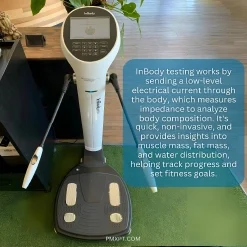
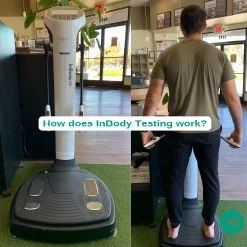
- Measure your fat, muscle, and water levels in less than a minute. No dunking. No pinching. No discomfort. Simply stand on the device and hold the hand electrodes to test.
- Non-invasive and pain-free testing
Bioelectrical Impedance Analysis
Safe, low-level currents are sent through the body through the hand and foot electrodes. The impedance the currents encounter are measured, and from there, your body composition is derived. With InBody’s patented technology, BIA has never been more highly correlated with gold standard methods until now.
Each InBody Test will print out a full-page results sheet detailing the muscle, fat, and water values of the user. The InBody scan provides you with lean mass and fat values in each segment of the body to give you a proper assessment of body composition.
Segmental Fat And Lean Mass Analysis
Identify how many pounds of lean mass and fat are in each body segment. This can be utilized to determine how specific diets and exercises are affecting the body composition.
Injury Identification
You can identify and track inflammation, swelling, and even injuries with ECW/TBW Analysis while monitoring how this ratio changes over time under the Body Composition History chart. Call us today to schedule your assessment!
What are some of the most common hiking injuries?
Even for the most experienced hiker, pain and injury can still occur. Some of the most common hiking injuries include:
Twisted ankle.
This is perhaps the most common injury that hikers experience. Hiking terrain is uneven and can sometimes contain hidden obstacles or slippery surfaces. We’ve all seen it before: you’re on the trail, taking in the scenery, when suddenly… you slip on an unsteady rock. This can leave someone hindered for the rest of the trail, not to mention how it will pose an unfortunate and possibly painful recovery period ahead. Twisted ankles can be avoided by wearing appropriate hiking boots with ankle protection, as well as carrying a hiking stick or some other form of stabilizing equipment with you along the trail. If you do twist your ankle, make sure to follow the R.I.C.E method afterwards – rest, ice, compression, and elevation. If pain persists, make sure you contact a physical therapist as soon as possible to relieve pain and prevent further damage.
Muscle cramping.
Muscle cramps can be limiting and even debilitating during a hike. Nothing can leave a hiker feeling more defeated quite like feeling a leg cramp with every step they take up the mountain. Cramping is often caused by dehydration, and can be avoided by keeping a water bottle with you during the hike and making sure you drink a large amount (if not all) of it throughout your journey. However, cramping can also be caused by tight muscles that are not used to the physical activity you are putting them through, especially for new hikers. Stretching before you hike, specifically in your ankles, calves, and thighs, can help avoid any pesky cramps that may leave you hindered.
Scrapes and abrasions.
Many hiking trails contain thorny bushes, branches, or twigs that you may have to maneuver through. Some are so subtle that you may not even notice it right away, but they can scrape up your arms and legs pretty badly if you are not careful. Wearing long pants and sleeves can make a huge difference in protecting your body against scrapes and abrasions, but they may not always provide full coverage or complete protection. If you do find yourself sustaining a cut while you’re on the trail, make sure to apply an antibiotic lotion and band-aid to the affected area as soon as you get home, after washing it thoroughly. Keep an eye on it for a few days, and if it doesn’t seem to get any better, contact your primary physician as soon as possible to make sure it is not infected.
Contact PerformaX Elite for relief!
While preventative measures greatly decrease your risk of feeling pain or sustaining an injury, sometimes accidents happen and you may still end up with some discomfort. If you find yourself feeling persistent pain after your hike, contact PerformaX Elite to find some relief. We’ll help you get back on the trail in no time!
Refer A Friend & Get A $25 Gift Card!
Do you know someone who could benefit from physical therapy? Tell them about PerformaX and if they become a patient, we’ll send you a $25 Visa Gift Card! It pays to refer friends and family to PerformaX!
What is the TPI Golf Assessment?
Titleist Performance Institute (TPI) has created a golf assessment to screen for physical mobility or stability deficiencies that may negatively impact your game. Identifying key areas of weakness or inflexibility “timely” enough, will give us time to provide you with a program to correct the defaults, improve your game and prevent the injuries that result from these imbalances and compensations.
What Happens During a PMX® TPI Assessment?
The Assessment will take up to an hour. Following a brief health screening, we’ll begin the physical test. Come dressed comfortably and ready to participate. You will be led through a series of fitness movements that are key components of the golf swing. We’ll go over your results with you to assure that you have an understanding of how your findings might be impacting your golf performance.
Is it Right for Me?
A PMX TPI Assessment is not just for those who have been previously injured or know that they have a physical limitation. To schedule an appointment in the PMX Golf studio with one of our pros, call us today.


Grilled Eggplant with Feta
Ingredients:
- 1 large eggplant
- 1 tablespoon red wine vinegar
- 1 tablespoon extra-virgin olive oil
- 2 teaspoons dried oregano
- 1 large garlic clove, or 2 small cloves, pressed or minced
- 1/2 teaspoon kosher salt, plus more as needed
- 2 ounces feta cheese, crumbled (about 1/3 cup)
Directions:
-
Preheat the grill to high.
-
Trim the ends off of the eggplant and cut it crosswise into 12 1/2-inch thick slices. Season just the tops of the slices lightly with salt.
-
In a small bowl, whisk together the red wine vinegar, olive oil, dried oregano, garlic, and salt.
-
Lay the eggplant slices on the grill with the salted side up. Grill, uncovered, for 5 minutes, then flip.
-
Spoon or brush all of the garlic-herb mixture over the tops, sprinkle evenly with the feta, then cover the grill and continue grilling until the cheese is melted and the eggplant is tender, about 5 minutes more.
-
Transfer the grilled eggplant to a serving platter and serve hot or warm.
Posture Tips For Students
The benefits of good posture are more than just looking good, especially as a college student where you spend most of your time sitting down at a desk in the library or an uncomfortable chair in a lecture hall. No worries, though, we have your back and we have some tips for you to improve your posture without even trying.
- Adjust your backpack: One of the reasons your back hurts is because the weight you carry on your backpack. The gap between your back and your backpack is what causes the stress to your back, though, which damages your posture at the end. To fix this, adjust your backpack handles so it can be as close to your back as possible to avoid your spine to curve excessively when carrying your backpack.
- Unload your backpack: I know, I know, you have a biology exam tomorrow and you need to bring your chemistry book with you so you can do the lab properly. But carrying everything in your backpack and loading it with heavy school supplies is not good for your back or your posture. Leave the heavy supplies at your apartment and take a good walk home every time you need them (say yes to exercise!) or carry them in your hands. This will -literally- take weight from your back and will improve your posture.
- Wear both straps of your backpack: The cool kids walk around campus carrying their backpacks on just one shoulder, but the cool kids also have bad posture and back problems. Do not follow this trend, and use both straps of your backpack so the weight is evenly distributed on your back.