

Are Shin Splints Getting In The Way of Your Runner’s High?
Are Shin Splints Getting In The Way of Your Runner’s High?
Do your shins throb after your daily jogs? You may be experiencing shin splints. At PerformaX Elite, our physical therapists can help your shin splints whether or not you’re a runner. We offer the most advanced rehabilitation strategies to get you relief and eliminate re-injury.
Shin splints, also known as medial tibial stress syndrome, occur when excessive stress is on your shinbone and the surrounding tissues. These tissues become irritated, inflamed, and painful.
Research indicates that around 15% of runners experience shin splints and they are the most common injury for new runners. Shin splints can present themselves in anyone whose lifestyle includes substantial physical demand or after a significant increase in their activity level.
Shin splints can be painful and debilitating in your daily life, but physical therapy can help alleviate the pain and correct the condition.
Call our office today and speak with someone about how physical therapy can help fix your shin splints!

Our Patients Get Great Results
“After suffering a bad fall at work, I had an extensive shoulder surgery. I was scheduled for 12 visits at PerformaX Physical Therapy. My PT Physician (DR) was Alex Luu. He was extremely thorough and always seemed empathetic to my situation. An extremely positive and reassuring individual who motivated me and my recovery to a level that I have not experienced in past PT recoveries, in my life of almost 60 years. I was discouraged in the speed of recovery but in the end, I am completely reassured that in seeing the progress achieved from beginning to end, I should make an acceptable recovery due to my age and severity of injury. I (100%) recommend this establishment and all the therapists who assist there. They are top notch.” -E.B.

Staff Spotlight: Dr. Steven D Newton, Owner, PT, DPT, MBA, TPI
Envisioning goals and following your heart is what Steven Newton teaches and what he’s all about. His passion for fitness and exercise, combined with his desire to help others, led to a doctoral degree in Physical Therapy. While perfecting his clinical skills in orthopedic trauma and spinal rehabilitation, he took night classes and earned an MBA from the University of Redlands in California.
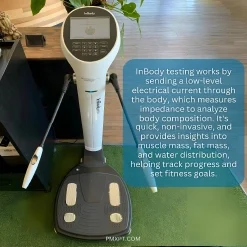
What Is InBody Testing?
No Estimations. Exact Results.
- Only impedance is used to determine your body composition results; no statistical data or empirical equations are used or required to predict your body composition.
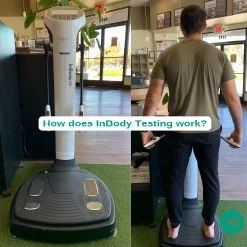
- Measure your fat, muscle, and water levels in less than a minute. No dunking. No pinching. No discomfort. Simply stand on the device and hold the hand electrodes to test.
- Non-invasive and pain-free testing
Bioelectrical Impedance Analysis
Safe, low-level currents are sent through the body through the hand and foot electrodes. The impedance the currents encounter are measured, and from there, your body composition is derived. With InBody’s patented technology, BIA has never been more highly correlated with gold standard methods until now.
Each InBody Test will print out a full-page results sheet detailing the muscle, fat, and water values of the user. The InBody scan provides you with lean mass and fat values in each segment of the body to give you a proper assessment of body composition.
Segmental Fat And Lean Mass Analysis
Identify how many pounds of lean mass and fat are in each body segment. This can be utilized to determine how specific diets and exercises are affecting the body composition.
Injury Identification
You can identify and track inflammation, swelling, and even injuries with ECW/TBW Analysis while monitoring how this ratio changes over time under the Body Composition History chart. Call us today to schedule your assessment!
Common Causes of Shin Splints
Shin splints are most common with athletes but can occur with anyone who makes training errors, like overloading or running too fast for their ability and training capacity. Often the injury is related to changes in the training, as an increase in distance, intensity, and duration.
There are other causes of shin splints, including:
- Previous injury: If you have had a foot, leg, or shin injury in the past, your risk of shin splints is higher.
- Body mass: A BMI greater than 20 makes you more susceptible to developing shin splints.
- Improper footwear: Wearing ill-fitted shoes or a previous history of wearing orthotics can increase your risk of shin splints.
- Inexperienced runners: Training mistakes made by novice runners include running too far, too fast, and not resting appropriately.
- Lack of warm-up: Completing a workout without a warm-up can irritate your calf muscles, increasing your risk of shin splints.
- Overpronation: Excessive flattening of the arches while standing, walking, or running increases the risk of shin splints.
The best treatment for shin splints is prevention. Our physical therapists will screen you to identify your risk factors and provide guidance on how to resolve your pain and/or prevent shin splints altogether.
How Physical Therapy Can Help
As noted above, the causes of shin splints are vast, but your physical therapist can help you figure out the root of the problem. They will complete an extensive evaluation process noting your painful areas and testing the abilities of your current physical motions.
Our treatments may include anything involving stretching, flexibility, gait, mobility, and range of motion. From there, your physical therapist will create a treatment plan based on your needs.
Treatment plans for a specified shin splint condition may include, but are not limited to:
- Manual therapy. Hands-on massage of the painful area and its surrounding areas to ease stress off of the injured tissue.
- Exercise. These exercises can serve several functions, including strengthening, improving range of motion, and decreasing stress on the lower leg.
- Modify mechanics. Sometimes, shin splints can result from poor gait mechanics or jumping and landing strategies. Your physical therapist may work with you to modify your take-off/landing techniques or how you control your foot, knee, and hip while walking or running.
- Taping. Your physical therapist may suggest Kinesio-taping the affected area to promote healing and support the affected muscles.
- Footwear suggestions. Your physical therapist may provide you with advice to help speed up your shin splint recovery and decrease your risk in the future.
- Rest. Your physical therapist may suggest taking a short break from the activity that caused or aggravated your pain. You will continue exercising, but avoid things that irritate your shin splints until you are healed.
Contact Our Office Today
At PerformaX Elite, we are dedicated to assisting you in your healing journey and making it as comfortable for you as possible. If you believe you may be suffering from shin splints, give us a call today. We will help you get back on your feet in no time!
Refer A Friend & Get A $25 Gift Card!
Do you know someone who could benefit from physical therapy? Tell them about PerformaX and if they become a patient, we’ll send you a $25 Visa Gift Card! It pays to refer friends and family to PerformaX!
What is the TPI Golf Assessment?
Titleist Performance Institute (TPI) has created a golf assessment to screen for physical mobility or stability deficiencies that may negatively impact your game. Identifying key areas of weakness or inflexibility “timely” enough, will give us time to provide you with a program to correct the defaults, improve your game and prevent the injuries that result from these imbalances and compensations.
What Happens During a PMX® TPI Assessment?
The Assessment will take up to an hour. Following a brief health screening, we’ll begin the physical test. Come dressed comfortably and ready to participate. You will be led through a series of fitness movements that are key components of the golf swing. We’ll go over your results with you to assure that you have an understanding of how your findings might be impacting your golf performance.
Is it Right for Me?
A PMX TPI Assessment is not just for those who have been previously injured or know that they have a physical limitation. To schedule an appointment in the PMX Golf studio with one of our pros, call us today.


Pumpkin Pie Overnight Oats with Chia
Ingredients:
- 1/4 cup plain nonfat greek yogurt (or use vanilla!)
- 1/2 cup unsweetened vanilla almond milk (or any milk)
- 1/4 cup pumpkin puree
- 1-2 tablespoons pure maple syrup
- 1/2 teaspoon vanilla extract
- 1/2 cup rolled oats (gluten free if desired)
- 2 teaspoons chia seeds
- 1/2 teaspoon pumpkin pie spice
Directions:
- In a medium bowl, mix together greek yogurt, almond milk, pumpkin puree, vanilla and 1 tablespoon maple syrup until well combined.
- Stir in oats, chia seeds and pumpkin pie spice. Taste and add more maple syrup if you want it sweeter.
- Pour into a glass jar or container and place in fridge for 4 hours or overnight. Makes 1 serving of pumpkin overnight oats.
Sources:
- https://www.ambitiouskitchen.com/pumpkin-pie-overnight-oats/
- http://medrehab.sbmu.ac.ir/article_1101036_en.html
- https://link.springer.com/chapter/10.1007/978-3-030-60216-1_18
- https://www.researchgate.net/profile/Shaji_Kachanathu/publication/320685151_Functional_outcomes_of_kinesio_taping_versus_standard_orthotics_in_the_management_of_shin_splint/links/5c160f2e92851c39ebf0e7f8/Functional-outcomes-of-kinesio-taping-versus-standard-orthotics-in-the-management-of-shin-splint.pdf