
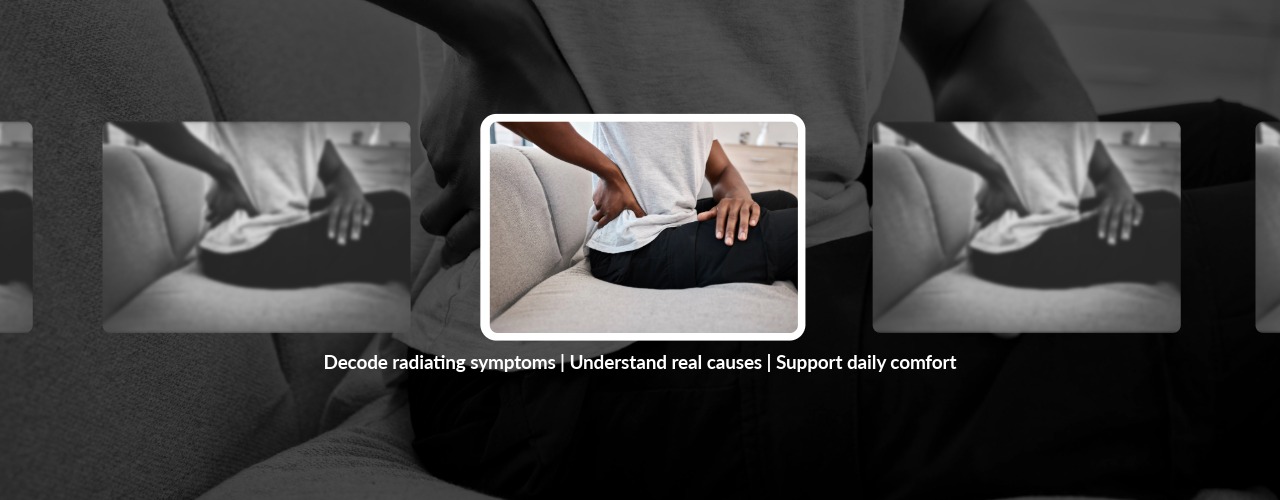
If you feel pain in your hip that spreads into your leg, it can be confusing and frustrating. Many people search online and find scary or unclear answers. This guide explains the facts about hip pain radiating down the leg and helps you understand what may be happening in your body.
We wrote this for people who want simple, clear information about hip and leg pain. It is also for anyone who wants to understand their symptoms without fear or blame. The goal is to help you feel more confident about what you can do next.
Debunking Common Myths About Radiating Leg Pain
Myth 1: Radiating Pain Always Means Something Serious
Many people think that pain traveling down the leg must be a sign of a major problem. This belief can make symptoms feel even more stressful.
In reality, radiating pain can come from many common and manageable causes. These may include irritated soft tissues, sensitive nerves, or changes in how your hips and lower back move together. These issues often relate to daily habits, activity levels, or muscle fatigue.
Why This Matters
Knowing that there are many possible causes can help you focus on helpful steps instead of worrying about the worst case.
Myth 2: It Must Be a Hip Joint Problem
It is easy to assume that pain near the hip always comes from the hip joint itself.
However, the hip, pelvis, and lower back work as a team. When one area becomes tired or stiff, it can affect how the others feel. This can create pain that spreads into the thigh or lower leg.
Why This Matters
Understanding how these areas connect helps you make sense of your symptoms.
Myth 3: Only a Pinched Nerve Can Cause Radiating Pain
Some people believe that hip pain radiating down the leg always means a nerve is being pinched in the lower back.
While it’s true that sciatic nerve irritation can play a role, muscles and movement patterns can also create spreading pain. When these tissues become sensitive or overworked, they can send signals that feel like they travel down the leg.
Why This Matters
Knowing this helps you avoid assumptions and focus on what you can control.
Myth 4: Hip Pain Radiating Down the Leg Always Needs Imaging
Many people think they need imaging right away to understand their symptoms.
Fortunately, most cases can be understood through a physical therapy evaluation. Your provider looks at how you move, how your muscles support you, and how your daily activities affect your symptoms. Imaging is usually not the first step unless certain red flags are present.
Why This Matters
A movement-based evaluation often gives more useful information for improving your daily comfort.
Myth 5: Rest Is the Best Way to Feel Better
It may feel natural to rest when hip pain radiating down the leg symptoms flare, but too much rest can sometimes make discomfort last longer.
In reality, movement often helps reduce symptoms. This may include walking, stretching, or simple strengthening exercises that support your hips and lower back.
Why This Matters
Movement helps your body share the workload and can reduce irritation over time.
Myth 6: Hip Pain Radiating Down the Leg Means You Should Stop All Activity
Some people worry that activity will make their symptoms worse, so they avoid movement.
However, most people do better when they stay active within a comfortable range. Gradual, guided activity helps your body adapt and can improve how your hips and legs work together.
Why This Matters
Avoiding activity can lead to stiffness and muscle fatigue, which may increase discomfort.
Myth 7: You Must Live With Radiating Pain Long Term
It is common to feel discouraged when hip pain radiating down the leg symptoms come and go.
Fortunately, many people improve with a personalized plan that focuses on movement, strength, and daily habits. A physical therapy evaluation can help identify the factors that may be contributing to your symptoms and guide you toward steady progress.
Why This Matters
Understanding your unique situation helps you take steps that support your daily life.
Take the Next Step Toward Relief
If you want help understanding your hip pain radiating down the leg symptoms and learning how to move with more comfort, contact PerformaX Elite Physical Therapy to schedule an evaluation. During your first visit, your provider will learn about your goals, assess your movement, and create a plan that supports your daily activities.

