
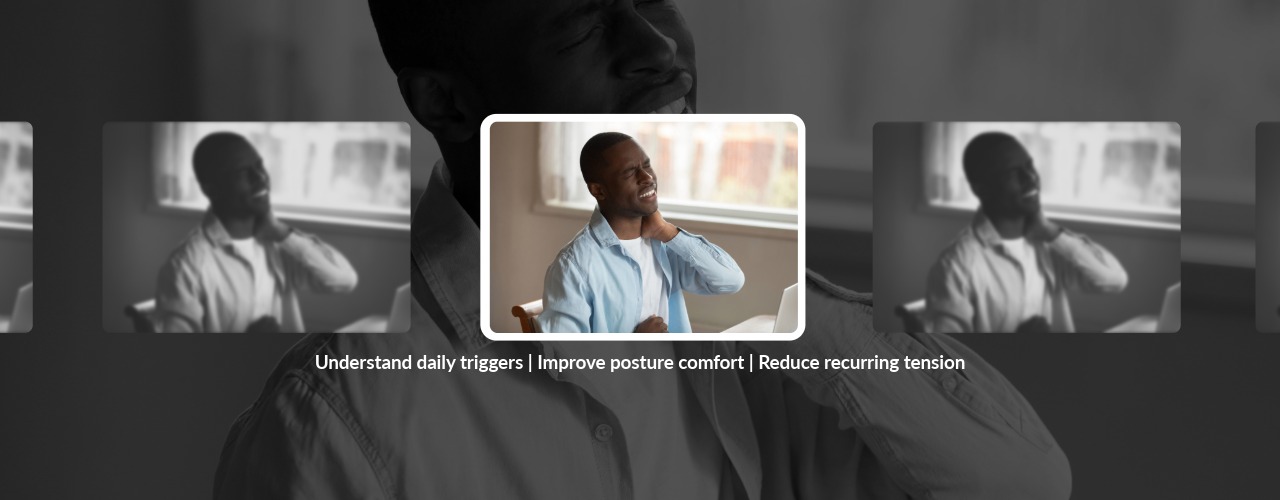
If you have been dealing with neck pain from sitting, you are not alone. Many people notice stiffness or discomfort during the workday and are unsure why it keeps happening. This guide explains the real reasons your neck may feel tense and what you can do to improve your comfort and function.
This guide is for anyone with neck pain from sitting who spends long periods at a desk, in a car, or on a device and wants clear, practical steps to reduce discomfort. It is also for people who just want to understand their symptoms better. The goal is to help you move through your day with more ease and confidence.
Why Sitting Can Affect Your Neck More Than You Expect
Neck pain from sitting is rarely caused by one single issue. It often comes from a mix of habits, muscle fatigue, and how your body responds to long periods in one position. Understanding the following factors can help you make simple changes that support your comfort throughout the day.
1. Staying in One Position for Too Long
Your body is built to move. When you stay in one position for long periods, certain muscles work harder while others stay still. This can create tension in your neck and shoulders.
What To Do
Change positions often. Stand up, stretch, or shift your weight every so often.
Why It Helps
Gentle movement helps your muscles share the workload and reduces stiffness.
2. Muscle Fatigue From Supporting Your Head All Day
Your neck muscles work continuously to support the weight of your head. When they get tired, they may feel tight or achy.
What To Do
Add simple strengthening exercises for your upper back and shoulder blades.
Why It Helps
Stronger support muscles help your neck stay comfortable during daily tasks.
3. Screen Height That Makes You Look Down or Forward
Many people unknowingly position their screens too low or too far away. This can make your neck lean forward or tilt down for long periods.
What To Do
Raise your screen so the top is near eye level. Bring your keyboard and mouse close enough to avoid reaching.
Why It Helps
A comfortable setup reduces strain on your neck and shoulders.
4. Stress and Tension That Change How You Hold Your Body
Stress can influence how your muscles behave. Many people tighten their shoulders or hold their breath when they feel tense.
What To Do
Practice slow breathing or take brief relaxation breaks during the day.
Why It Helps
Reducing tension helps your muscles work more efficiently and can ease pressure on sensitive areas.
5. Limited Movement in Your Upper Back
Your upper back and rib cage help your neck move comfortably. When these areas feel stiff, your neck may take on more work.
What To Do
Add upper back stretches or rotations to your routine.
Why It Helps
Improving mobility in your upper back helps your neck move more freely.
6. How Your Workspace Influences Your Movement
Your chair, desk height, and screen setup all affect how your body moves throughout the day. Small changes can make a meaningful difference.
What To Do
Adjust your chair so your feet rest flat, and your shoulders feel relaxed. Keep items you use often within easy reach.
Why It Helps
A comfortable workspace supports better movement and reduces unnecessary strain.
7. When to Seek Care and What Signs to Watch For
Most neck discomfort improves with simple changes, but some signs mean you should reach out for help. These include new weakness in an arm, changes in coordination, or symptoms that spread quickly.
What To Do
If you notice these changes, contact a physical therapist. If your symptoms stay the same for a long time or keep returning, an evaluation can help you understand why.
Why It Helps
Early guidance can help you move with more confidence and prevent symptoms from interfering with your daily activities.
What an Evaluation at PerformaX Elite Physical Therapy Looks For
Our physical therapy evaluations can help you understand what is contributing to your symptoms. Your provider looks for general patterns such as how your neck and upper back move, how your muscles support you, and how your daily habits influence your symptoms.
Next, your therapist will assess your movement and strength. They will look at your posture and how you hold your body. This information helps to guide the treatments they will use. Our team typically focuses on the following:
- Manual therapy to help alleviate your neck pain from sitting symptoms and improve your joint and tissue mobility
- Strengthening exercises to improve your upper back and neck control
- Postural education on how to hold your body and when to change positions to alleviate tension
- Education on the steps you can take to minimize the recurrence of neck pain from sitting in the future
Take the Next Step Toward Relief
If you want help understanding your neck pain from sitting symptoms and learning how to move with more comfort, a physical therapy evaluation can give you clear guidance. During your first visit, your provider will learn about your goals, assess your movement, and create a plan that supports your daily activities. Call today and get started on your road to recovery!

